unbarrier.me
you bought it. nobody checked it reached the child.
the invoice cleared. the licences are live. the training happened. and the child it was bought for still can’t use it. we find out where that broke and we say so — including when the answer is you.
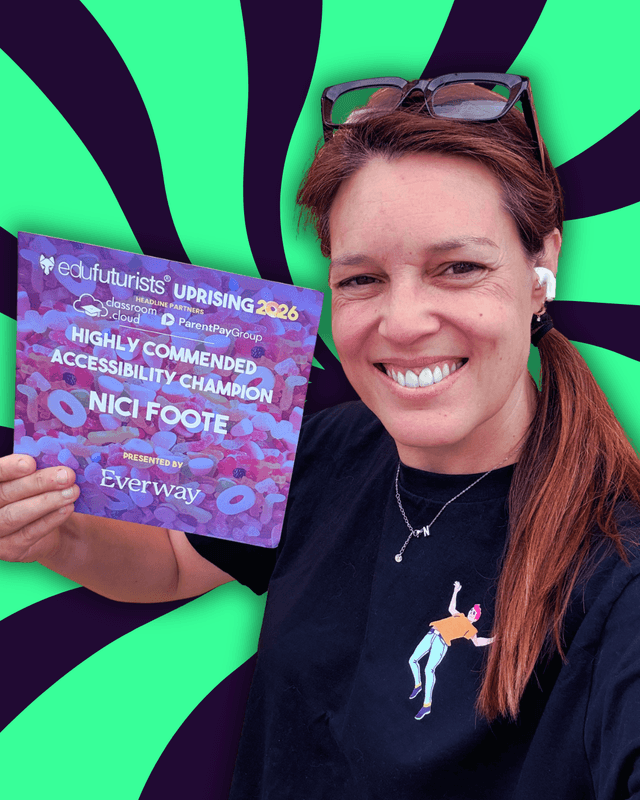

led by nici foote
dyslexic, dyscalculic and adhd educator · 26 years in classrooms · digital inclusion specialist
primary · secondary · special · alternative provision · colleges · international — and everyone in the chain, not only the person who signed it off.
where to start
tell us what you are. we’ll tell you where to start.
- i’m a teacher or sencoyou can see what isn’t working, and you’re not the person who holds the budget. the free readiness check, in a form you can forward upwards.
- i’m a schoolone setting, and you want to know whether what you bought is reaching the learners it was bought for. a discovery day.
- i’m a trust or a groupseveral settings, one picture across all of them, and something a board will accept as evidence. a trust-level baseline.
- i’m an international school or groupdifferent constraints, different procurement, and it isn’t a uk offer with the names changed. a conversation.
- i’m an edtech companyyou have a product, and you need to know whether it works for the learners you say it serves. unbarrier for edtech.
for schools with inclusive mainstream funding
your inclusion strategy has to be published by 31 december.
we help schools write it — guided, not done for you.
how we help schools write it →what it asks — the seven questions
- provision
- is there a device, a tool, a connection at all — and is it in the room, charged and working when the lesson starts?does the thing exist for this child, or only on the inventory?
- access
- can the child get into it without an adult beside them — the settings, the login, the support features?does it work for them, not just work?
- design
- was the material built with more than one way in, before anyone had to ask for an adjustment?universal design, and the only lever left where the law cannot reach.
- capability
- can the adults set it up on a tuesday, and does it hold across teachers, subjects and buildings when the champion is away?is this practice, or is it one person?
- belonging
- does the child want to be there, take part without being asked, and get back in when something goes wrong?access without belonging is attendance.
- trust
- do the child, the family and the staff believe it will work when it matters — and believe their data is safe?a tool that fails twice in front of a class is never opened again, whatever the audit says.
- evidence
- can you show a parent, a governor or an inspector what actually changed, without reaching for the word “engagement”?if it cannot be shown, it cannot be funded, defended, or done again.
free, and yours
take it and use it. you don’t have to pay us to fix this.
five minutes. nine questions. one honest answer.
find out whether what you bought is reaching learners. if you’d rather talk it through first, forty-five minutes, no deck, no pitch.
notice
one email when there is something worth saying. nothing when there isn’t. written for people who don’t have time to read it twice.